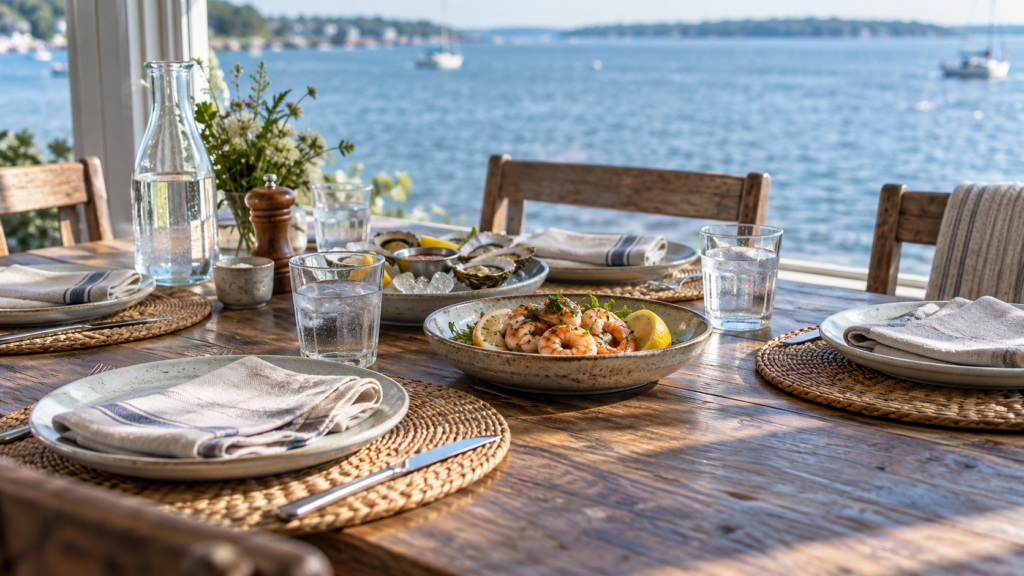
The hardest part of a group lunch is sometimes getting everyone to the same table. One household leaves early, another waits for a visitor, and someone discovers that the arrival time in the family chat was only a suggestion. A waterfront meal on City Island can still feel relaxed when the organizer settles a few practical details before anyone starts traveling. The aim is not to control every minute. It is to give guests a clear destination, a realistic meeting time, and a simple way to communicate changes without making the restaurant coordinate several separate conversations.
Begin by distinguishing the time people should arrive from the time they hope to eat. Those are not necessarily the same. A guest who hears lunch is at one may plan to park at one, while another expects the first course then. Choose a meeting time and explain what it means in ordinary language. Tell everyone whether they should meet inside, check in with the host, or contact the organizer when nearby. Avoid promising that a particular table or seating arrangement will be available unless the restaurant has confirmed it directly.
At Sea Shore Restaurant and Marina, use the reservation request page to start the booking conversation. A request is not the same as a confirmed arrangement. Keep the restaurant’s response with your planning notes and make sure the date, time, and party size match what you intended. If your group includes several households, select one person to handle booking questions. That person can collect the answers and share them once, instead of allowing different versions of the plan to circulate.
Count people rather than households. A message saying three families are coming does not tell anyone how many places are needed. Ask for a definite number of adults and children, then note anyone who is still uncertain. Do not quietly include tentative guests in a confirmed total or assume a smaller table can expand at arrival. Ask how the restaurant wants changes reported and when it needs the final count. A clear update is more useful than an optimistic estimate that nobody revisits.
Give each traveling group the same destination information. Forward a single message with the restaurant name, confirmed booking time, and the name on the reservation. Include the organizer’s mobile number in the private group conversation, not in a public post. Ask guests to check their own route before leaving. Someone taking public transport may need a different buffer from someone driving from a neighboring borough. A generous travel allowance is a planning choice, not a guarantee that traffic, transit, or parking will cooperate on the day.
Summer weather is another reason to keep expectations flexible. Before departure, check the National Weather Service New York forecast for local conditions and any relevant alerts. Use that information to plan the journey, clothing, and any time outside. Do not treat a pleasant forecast as a promise of outdoor seating. Likewise, do not assume a waterfront visit includes docking access or other marina arrangements. Those are separate questions that need a direct answer from the venue.
Ask about access needs early, in specific and respectful terms. A guest may need fewer steps, room for a mobility device, or a shorter walk from the arrival point. Ask the person what would actually help, then discuss the practical requirement with the restaurant. Avoid making assurances based on a photograph or on a previous visit. Building layouts, available spaces, and the day’s arrangements can differ. Share the confirmed information with the guest privately so they can decide whether the plan meets their needs.
Food preferences deserve the same advance attention. Invite guests to review the current Sea Shore menu before the trip rather than asking the organizer to guess everyone’s order. The menu gives the group a starting point, but availability and preparations should be confirmed when ordering. A person with a food allergy or another dietary requirement should speak directly with restaurant staff. The organizer can help start that conversation, but should not interpret ingredients or promise that a shared dish will suit everyone.
When arrivals will be staggered, discuss ordering expectations before the first guests sit down. Some groups want to wait until everyone is present. Others prefer that early arrivals order their own drinks or a starter. Either approach can work if guests understand it and the restaurant can accommodate it. Ask staff rather than assuming dishes can be held indefinitely or that a table can remain open without limits. A simple agreement prevents early guests from feeling stranded and later guests from feeling that they have delayed the whole occasion.
A shared starter is not automatically the easiest solution. People may have different appetites, dietary restrictions, or opinions about splitting an order. Let guests decide whether they want individual dishes or a shared selection, and clarify the choice before placing it. Keep serving utensils and personal plates distinct where appropriate, and direct preparation questions to staff. The purpose is to make the meal comfortable, not to turn every menu decision into a committee meeting. Two clear options are often easier to discuss than an open ended debate.
Think about the pace of lunch as well as the arrival. A family with young children may prefer a shorter meal, while visiting relatives may want a longer conversation. Ask whether anyone has a firm departure time and plan around the earliest real constraint. Do not promise a service speed that the restaurant has not agreed to. If several guests have an appointment afterward, mention that when discussing the booking and again when ordering. Staff can explain what is practical that day, allowing the group to adjust its expectations.
Settle the payment conversation privately before it becomes awkward at the table. Decide whether one host is treating everyone, each household is paying for itself, or guests intend to share particular dishes. Ask the restaurant about its payment arrangements rather than assuming it can divide a bill in any requested way. Do not announce a fixed cost based on an old menu image or another group’s experience. Menu choices, drinks, taxes, and service arrangements can change the total, so guests should understand what they are agreeing to.
Prepare one brief update message for the day itself. It can repeat the booking name, meeting time, and the instruction to tell the organizer if travel changes. Ask guests not to send every minor update to restaurant staff individually. If the party size or timing materially changes, the organizer should contact the restaurant promptly and accept that a new arrangement may not be possible. Silence is rarely helpful when a confirmed booking no longer matches the group that is actually on its way.
Leave room for guests who are not comfortable using a busy group chat. Call them or send a direct message with the same final information. A screenshot of a long conversation is not a reliable substitute for a clear plan. Confirm that the person has the destination and understands the time, especially if someone else is arranging their ride. Choose one backup contact who knows the booking details in case the organizer is driving or briefly unavailable. That small handoff can prevent several avoidable calls.
On arrival, introduce the booking once and let the host guide the next step. Tell staff if members of the confirmed party are still traveling, without promising an arrival time you cannot verify. Keep entrances and walkways clear while waiting. If the group needs to change its plan, discuss the available options calmly with the restaurant rather than moving tables or rearranging seating independently. Good coordination respects both the guests’ needs and the staff’s responsibility for the room.
After lunch, avoid creating a second rushed gathering around the exit. Let guests collect their belongings and confirm their return arrangements before the group disperses. Anyone waiting for a ride should know whom to call if that ride changes. If you want a group photograph, ask where it can be taken without interrupting service or blocking a walkway, and respect guests who prefer not to be included. These small courtesies matter more than a perfectly synchronized arrival. They help the occasion end as comfortably as it began, even when everyone heads home in a different direction.
A well planned waterfront lunch should feel like time together, not a travel exercise. Before everyone leaves home, check the confirmed reservation, final headcount, access questions, dietary conversations, and payment expectations. Then send one clear message and allow the day to unfold. For an unanswered planning question, use the restaurant’s contact information before making promises to the group. A few specific answers in advance give everyone more space to enjoy the meal and the company when they finally arrive.